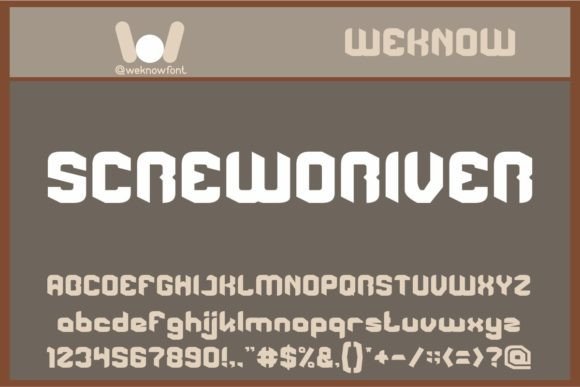
Screwdriver Font: A Bold and Unique Display Type
The Screwdriver font is a modern, techno display typeface that stands out with its bold and distinctive design. Designed for visual impact, it offers a strong presence that can elevate any project. Whether you're working on a book cover, magazine layout, social media graphic, or invitation, Screwdriver brings a unique energy to your work.
What Is Screwdriver?
Screwdriver is a display font that combines elements of industrial design with digital aesthetics. Its sharp edges, angular lines, and mechanical feel give it a futuristic and edgy appearance. The font is ideal for projects that require a strong visual statement, making it a popular choice among designers looking to add a modern touch to their work.
Why Consider Screwdriver?
Designers often choose Screwdriver for its ability to convey a sense of innovation and strength. Its bold structure makes it highly legible at larger sizes, which is beneficial for headlines, logos, and other prominent text elements. The font's unique style can help differentiate a design from others, especially in competitive markets where visual identity is key.
Additionally, Screwdriver's versatility allows it to be used across various mediums. From print materials like brochures and posters to digital platforms such as websites and social media, the font adapts well to different formats. This flexibility makes it a valuable addition to a designer's toolkit.
Benefits of Using Screwdriver
One of the primary benefits of Screwdriver is its ability to command attention. Its striking design ensures that it stands out, making it ideal for projects that need to capture the viewer's eye immediately. This quality is particularly useful in advertising, branding, and editorial design.
Another advantage is its compatibility with other fonts. While Screwdriver is a display font, it can pair well with more traditional typefaces to create a balanced and cohesive look. This makes it suitable for both standalone use and as part of a broader typographic system.
Considerations and Tradeoffs
Despite its strengths, Screwdriver may not be the best choice for every project. Its bold and angular style can be overwhelming if used excessively or in small text sizes. In such cases, the font may become difficult to read, which could detract from the overall message.
Additionally, the font's unique style may not align with all design aesthetics. For projects that require a more subtle or classic look, alternatives might be more appropriate. Designers should consider the context and audience when deciding whether to use Screwdriver.
Situations Where Screwdriver Excels
Screwdriver is particularly effective in situations where a strong visual identity is needed. For example, in the design of tech-related products, gaming interfaces, or creative agency branding, the font can reinforce a modern and innovative image. It also works well for event promotions, such as music festivals or product launches, where a dynamic and energetic look is desired.
In editorial design, Screwdriver can be used for headlines or section titles to add a layer of visual interest. Its boldness helps break up text and guide the reader's eye through the content, making it a practical choice for magazines or online publications.
When Alternatives Might Be Better
For projects that require a more refined or elegant appearance, alternative fonts may be more suitable. Fonts with a softer, more organic shape can provide a different aesthetic that complements certain design themes. Similarly, for projects with a large amount of body text, a more readable and neutral typeface would be preferable.
Designers should also consider the target audience. If the audience is more traditional or the project requires a professional tone, a simpler font might be more effective. The goal is to ensure that the typography supports the message rather than distracts from it.
Decision-Making Insights
When evaluating whether to use Screwdriver, designers should ask themselves a few key questions. Does the font align with the project's visual direction? Will it enhance the message or overshadow it? How does it perform in different sizes and contexts?
Testing the font in real-world scenarios can provide valuable insights. Creating mockups or prototypes allows designers to see how Screwdriver looks in action and whether it meets the project's needs. This process can help avoid potential issues before finalizing the design.
Ultimately, the decision to use Screwdriver depends on the specific goals of the project. If the objective is to create a bold, memorable visual identity, then Screwdriver is an excellent choice. However, if the focus is on subtlety, readability, or a more traditional approach, other fonts may be more appropriate.
Conclusion
Screwdriver is a powerful and distinctive display font that offers a range of benefits for designers. Its bold and modern style makes it ideal for projects that require visual impact and a strong identity. However, it is important to consider the context, audience, and overall design goals before incorporating it into a project.
By carefully evaluating the strengths and limitations of Screwdriver, designers can make informed decisions that align with their creative and functional objectives. Whether used as a standout element or as part of a broader typographic strategy, Screwdriver has the potential to enhance a wide variety of design work.